


The Night Canelo Conquered Light Heavyweight: How One Combination Changed Boxing History

The challenge that could redefine Canelo's career
On 2 November 2019, Saúl “Canelo” Álvarez stepped into the ring at the MGM Grand Garden Arena in Las Vegas attempting something few fighters achieve. Already a world champion in three weight divisions, the Mexican superstar was challenging Sergey Kovalev for the WBO light heavyweight championship. At 175 pounds, Canelo would be competing in the heaviest division of his professional career. Kovalev was a proven light heavyweight champion with a dangerous jab, considerable punching power and years of experience against elite opposition. The question was whether Canelo's defensive skills, counterpunching and precision could overcome the Russian's physical advantages. Eleven rounds later, boxing had its answer.
A dangerous champion with something to prove
Kovalev entered the contest following a difficult victory over Anthony Yarde on 24 August 2019. The Russian had survived a punishing eighth round before stopping the British challenger in the eleventh. Just ten weeks later, he was defending his championship against Canelo. That short turnaround became an important part of the fight's subsequent debate. Kovalev was 36 years old, had endured a demanding previous contest and was facing one of boxing's most accomplished counterpunchers. Nevertheless, he remained a legitimate world champion. Canelo was moving into unfamiliar territory against a naturally larger opponent.
The jab that frustrated Canelo
From the opening round, Kovalev attempted to establish his preferred distance. His jab was the foundation of his strategy. Rather than repeatedly committing to powerful right hands, he used straight punches to occupy Canelo, disrupt his advances and accumulate scoring opportunities. Canelo responded with measured pressure. He kept his guard compact, looked for opportunities to counter and attempted to close the distance without exposing himself unnecessarily. But the fight was not a one-sided demonstration of Canelo's superiority. Kovalev's activity and range made several rounds difficult to score. After ten completed rounds, two judges had Canelo leading 96–94, while the third had the contest level at 95–95. The championship remained competitive.
The combination that ended everything
With less than a minute remaining in the eleventh round, Canelo finally created the decisive opening. A powerful left hook struck Kovalev and visibly disrupted his balance. Canelo immediately followed with a crushing right hand. The Russian collapsed against the ropes and fell to the canvas. Referee Russell Mora stopped the contest. The official time was 2 minutes and 15 seconds of round eleven. There was no need for the judges. Canelo had captured the WBO light heavyweight championship by knockout.
Four divisions, one extraordinary achievement
The victory made Canelo a world champion in four weight classes: super welterweight, middleweight, super middleweight and light heavyweight. It also demonstrated the value of his patience. For much of the contest, Kovalev's jab presented a difficult tactical problem. Canelo did not solve that problem by dominating every round. He remained composed, continued looking for openings and eventually produced the combination that decided the championship. The knockout became one of the defining moments of his career.
Historical accuracy: Was the fight really one-sided?
The spectacular finish can create the impression that Canelo controlled the entire contest. The official scorecards contradict that interpretation. Two judges had him ahead by only two points, while the third scored the fight evenly. Another misconception is that Canelo had never competed above middleweight. He had already won a super middleweight championship in 2018. The Kovalev fight was his first at light heavyweight, not his first above 160 pounds. The official fight record lists KO 11, despite the referee stopping the contest immediately. Kovalev's age and short turnaround remain legitimate factors when evaluating the victory, but they do not establish that the contest was fixed or predetermined. On 2 November 2019, Canelo achieved something historically significant: he moved into a fourth championship division and defeated its reigning WBO champion with one of the most memorable combinations of his career.
Sources and image note
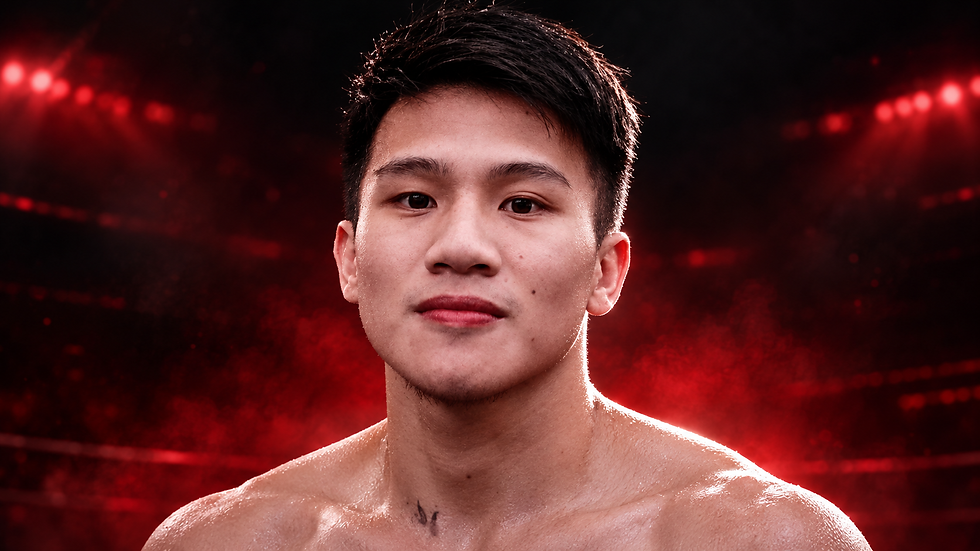
Fight record and scorecards: https://boxrec.com/wiki/index.php/Saul_Alvarez_vs._Sergey_Kovalev . Championship coverage: https://www.wboboxing.com/boxing-news/canelo-alvarez-knocks-out-sergey-kovalev-to-win-wbo-light-heavyweight-title/ . Featured artwork is an AI-generated historical illustration, not an archival photograph.


Comments